AI · FinTech · EdTech · Business Analytics · Robotics · Research
4 flagship platforms. 17 AI courses. 30 applications. 20 FinTech tools. 18 robotics builds. 6 educational games. 24 research outputs. 22 commissioned research projects. 30+ supervised student research projects. Taught in 5 countries across 22+ years. All built end-to-end and deployable to cloud or to local hardware — no institutional funding.
What AI can actually do, built and running. Working demonstrations across finance, education, health, business operations, robotics and research — each one built end to end.
AutoMatrixLab exists to close that gap one industry at a time. Each system here was built to answer a question somebody actually has — in finance, healthcare, education, marketing, retail, supply chain, manufacturing, real estate, robotics or research — and then built far enough to be watched working rather than described. All of it in the open, deployable to cloud or to local hardware, with no institutional funding behind it. The behavioural research is not separate from these products: it is what lets them adapt to the individual, reading how a particular person weighs risk, responds to reward and holds attention, and shaping the experience to the person using it rather than treating everyone the same.
Most organisations have access to AI now. Far fewer have changed how they work because of it. The gap is not access and it is not skill — it is that nobody has shown them what is actually possible. Everything here exists to close that gap: built end to end, running, and adaptable to a different industry.
Routing everything through a model is not automation — it is outsourcing the work to whoever owns the model. The repetitive work is automated inside the application, and the AI is called only for the part that genuinely needs it. That keeps the system fast, predictable, cheap to run, and mine.
By The Numbers
AI & Automation
Across ten fields
17
Courses
22
Commissioned Projects
3
Published Papers
Student-built
Platforms in production
6
Conferences
Industry Signals
The largest employers in the world now hire on what a person can build and show.
Google
“We no longer require a four-year degree for most of our technical roles. What matters is what you can do.”
— Google Career Certificates initiative
Tesla / xAI
“We don’t care where you went to school or whether you went to school. Show us your code.”
— Elon Musk, on Tesla hiring
IBM
“Half of our US jobs no longer require a degree. We are becoming a skills-first employer.”
— IBM Skills-First Hiring Policy
OpenAI
“The future of work will belong to those who can orchestrate AI — not compete with it.”
— Sam Altman, OpenAI
The Gap
Why so little has changed yet
Nobody has shown them
Access to AI is not the constraint. Most teams have the tools and no working example in their own domain to reason from, so the tools stay unused.
Capability bought, not used
Organisations buy capability and leave it idle. Everything here runs the same either way — on cloud or on local hardware — so the deployment follows what the organisation actually needs.
Work that never ships
Analysis that stops at a document changes nothing. Every research project here ships as a working application, a demo, and an explanation someone outside the field can follow.
Proof of concept, never production
Most AI work stops at a notebook. These systems run in production — a point-of-sale platform in a live business, research dashboards, and AI tutors people use daily.
Lead the change. Don’t chase it.
Analytics Platforms
My Platforms
Each flagship platform with its tour, then every platform feature demo underneath. Anything game-shaped lives in the Gamification tab. Every one of them is built on the behavioural research below, which is what lets a platform read how an individual weighs risk, responds to reward and holds attention, and shape itself to the person using it rather than treating everyone the same.
Machine Learning, AI & Automation for Business
ANX-FIN-001 — one pipeline, 33 case studies, four ways to build it4 demos
Students build a production machine-learning pipeline by dragging nodes on a touchscreen — no code at all — then run that same pipeline three further ways, down to raw Python. One pipeline, applied to 33 real industry case studies across 8 domains, each on a real dataset with competing models and a champion chosen on the metric that matters. No case study ends with just a report: each one ends with a live, deployable dashboard that scores every transaction, patient, customer, machine or property, every second, around the clock — 33 dashboards, one per case. It teaches the tools, the method, the subject matter, and workflow automation. Learn it, build it, deploy it. Built on the ML Analytics Platform v2.0 with the Codeless Pipeline Builder, at Massey University’s School of Mathematical and Computational Sciences.
The evidence standard behind these platforms — causal identification, natural experiments and hybrid models — is set out under Research.
18
modules
57
lessons
33
case studies
8
domains
9
pipeline stages
7
model families
4
environments per case
Codeless Pipeline Builder
The differentiator: build the whole pipeline by dragging nodes on a touchscreen — feature engineering, split & scale, competing models, champion selection, SHAP explain, report generation — with the case-study library open alongside. 6 min 02 s.
52.1 MB · 1920×1080
Case Study Library
All 33 studies across 8 industries. Each opens the same brief, runs the same real dataset, and can be read, run live, opened codeless or taken to raw code. 4 min 23 s.
55.6 MB · 1920×1080
Live Dashboards
The result of a run presented as a live dashboard — predictions, drivers and a regulator-ready view that refreshes as the model reruns. 4 min 18 s.
46.0 MB · 1920×1080
Full Code Environment
The same nine-stage pipeline in raw Python, in a full IDE with an integrated terminal and AI assistant — the fourth and deepest way to build the identical case. 2 min 54 s.
21.0 MB · 1920×1080
Research Automation
Hypothesis to draft paper, end to end4 demos + 3 tools
My research automation platform: it takes a hypothesis to a draft paper on its own. Two pieces — an interactive econometrics dashboard (Data, Viz, DiD, Policy, ML and Causal ML: pick an outcome, a shock and a treatment group, press run), and a batch pipeline that runs all nine phases in about two and a half minutes, producing the tables, figures, an AI-reviewed abstract and its own demo video. The platform is domain-agnostic; financial hardship is simply the first study put through it, run on 21 years of HILDA panel data and written toward the Journal of Banking & Finance.
9
phases
~2.5 min
hypothesis to draft
64
tables (study 1)
34
figures (study 1)
21 yrs
of panel data (study 1)
454,861
person-waves
11,595
first-landing events
First study through it · verdict logged as REVISE
The hypothesis was that people whose first hardship is asking family for help recover faster than those who simply cannot pay a bill. They do not. Strategic help-seekers recovered at 56.9% against 62.4% for bills-only (z = −3.67, p = 0.0002) — the opposite direction. The platform contradicted its own author and reported it anyway.
The Platform
The setup — the interactive econometrics dashboard and the batch pipeline that carries a hypothesis all the way to a draft paper. 1 min 48 s.
8.5 MB · 1920×1080
The Findings
The result the pipeline produced, including the finding that contradicted the hypothesis it was built to test. 1 min 26 s.
51.1 MB · 1920×1080
The dashboard, running
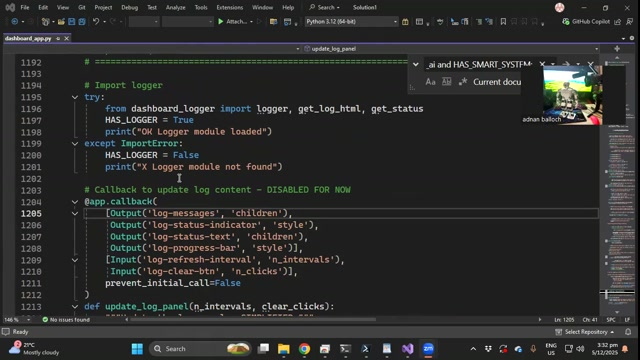
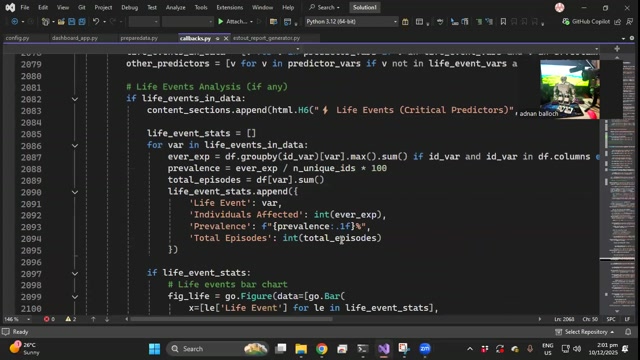
The interactive econometrics dashboard in use — upload data, prepare it, select a model, run the analysis, then summary stats, model results, comparison and a geo map. The preparation log streams as it works.
Project #86 · desktop
The same dashboard on a phone
Data, Visualization, Event Analysis, Dynamic DiD, Policy, ML Models and Causal ML — the full analysis surface running in a mobile browser, variables syncing automatically between tabs.
Project #85 · mobile
Custom LLM for FT50 Academic Journal Automation
A knowledge base built from 50+ papers in top finance and economics journals, grounding a model so it writes in the voice of the Journal of Finance, the Review of Financial Studies and JFE — not like a general chatbot.
Engineering Meets Business — Interdisciplinary Research Platform
A research platform built from the fusion of engineering precision, business insight and AI — advanced econometrics such as competing risks and survival analysis joined to deep machine learning.
Recursive Panel ML — New Mathematical and AI Model
A new mathematical and AI model introducing Recursive Panel Machine Learning: rather than training once and predicting, it trains, learns entity-specific structure, then predicts.
Live in-browser SAS workspace5 demos · access-gated
A practical course that moves students from “this correlation exists” to “this is the causal effect, and here is why the identification holds”. Each topic pairs a lecture with a hands-on SAS practical, and the later topics build to full case studies. The distinctive part is the live in-browser SAS workspace: students run real SAS code against real data without installing anything.
434
files
45
practicals
23
lectures
16
walkthroughs
204
D3 lessons
81
audio segments
6
datasets
The 9 topics
The Causal Question
OLS as a Causal Estimator
Regression Adjustment & Selection on Observables
Diagnostics for Identification
Binary Outcomes and Propensity Scores
Fixed Effects and Within-Unit Identification
Time Series and Difference-in-Differences
Forecasting and Instrumental Variables
Case Studies (Applied Training)
SAS Studio walkthrough
A shorter walkthrough. 6 min 01 s.
9.4 MB
Practical 7 — Binary Outcomes
Modelling whether a household carries credit-card debt: the linear probability model, then logit and probit, with marginal probabilities, marginal effects, odds ratios, an ROC curve and an interaction analysis.
17.2 MB · 2 min 20 s
Practical 8 — Time Series & Forecasting
Monthly UK house prices end to end: differencing, the white-noise and Augmented Dickey-Fuller tests, model identification, ARIMA and seasonal ARIMA estimation, then out-of-sample forecasting scored on MAE, MAPE and RMSE.
16.7 MB · 2 min 22 s
Practical 4 — Full Walkthrough
The long version, with SAS Studio open beside the practical: regression with the residual option, a histogram of residuals and predictions at new income values, worked through step by step.
13.0 MB · 12 min 41 s
Topic 1 — The Causal Question
Where the course begins: two futures for one person, only one of which is ever observed. The counterfactual, the individual causal effect, and why the other branch is a ghost.
29.8 MB · 4 min 13 s
Econometrics Course Automation
A practical that teaches itself, live in SAS StudioLive runner
Regression analysis, panel data, time series and limited dependent variable models, taught in SAS and Python. What makes it a platform rather than a set of slides is the live runner: it takes an ordinary SAS practical file and performs it, step by step, in a real SAS Studio session while the class watches — and can record that same run to video unattended.
9
topics
19
lessons
185
course files
154
practical files
3
split strategies
The automation — econ-live-runner
A single command drives a whole SAS practical through SAS Studio section by section, at presenter pace. The class watches the analysis actually happen in the SAS Studio tab rather than watching a slide about it. It splits a practical three ways — inline section markers, banner comment blocks, or a fallback on procedure boundaries — so an existing practical file needs no rewriting.
Run the whole file, a single section or a range; set the pace; add an on-screen banner; keep or clear the log between sections; and record the entire run to MP4 — which is how the practical recordings in this course were produced.
The 9 topics
Introduction to Econometrics
Simple Linear Regression
Multiple Regression & Testing CLRM
Dummy Variables & Binary Models
Limited Dependent Variables
Panel Data Analysis
Time Series: ARMA
Time Series: Forecasting
Case Studies (Applied Training)
Simple Linear Regression — full run
A session performed step by step in SAS Studio beside its own instructions — the kind of run the live runner drives. 3 min 29 s.
3.8 MB · shared recording
Real World Applications
More Platform Demos
Live demonstrations of the ML pipeline builder, fraud detection system, and interactive course features.
ML Pipeline Builder
Drag-and-drop pipelines, fraud detection, live reports5 demos
One application, recorded five ways. Build a machine-learning pipeline by dragging nodes — data ingest, cleaning, EDA, feature engineering, split & scale, competing models — then run it and read the results: live charts, confusion matrix, SHAP, ROC curve and generated reports. The demos below show it on desktop and tablet, and follow a fraud-detection case study end to end.
Drag-and-drop ML pipeline with node graph on tablet. Data Ingest → EDA → Feature Eng → Models → Evaluation.
Fraud Detection
Fraud Detection Pipeline — Full UI
Case studies, node sidebar, real-time charts. Isolation Forest + XGBoost on 2,000 records.
Evaluation
Confusion Matrix & Metrics
Live confusion matrix, Run Pipeline button, Student Report and Master Report tabs.
Pipeline Nodes
Pipeline Node Graph — Zoomed View
Full pipeline flow: Data Ingest → Data Clean → EDA → Feature Eng → Split & Scale → Isolation Forest.
24 Projects
Apps that make up the platform
The AI tutors, multilingual learning platforms, research collaboration tools and the NVIDIA infrastructure the platform runs on, in cloud or on local hardware.
📚 Platform, Tutors & Infrastructure (24)
SAS + AI Automation
One-click analysis, reporting and orchestration2 demos
SAS analytics driven by AI — a desktop tool that turns a dataset into analysis and a written report in one click, and the end-to-end pipeline that orchestrates the whole SAS workflow behind it. Each demo below shows a different layer of the same automation.
SAS + OpenAI Automation Pipeline 2.0 — Desktop Tool
A desktop tool that fuses SAS analytics with OpenAI intelligence for one-click data analysis and reporting.
Building an entire universe of educational systems — the platform architecture overview. A walkthrough of how AutoMatrixLab connects its AI apps, 17 courses, multi-agent AI assistants, and the NVIDIA infrastructure it runs on — cloud or local — into one unified learning platform.
Gamification
Every game I have built, in one place — each with its name, what it teaches and its demo. Each one adapts to the individual player, using the behavioural research to read how that person weighs risk, responds to reward and holds attention.
Last Token: The Misalignment
Cinematic open city action — Unreal Engine 5.82 demos
A cinematic open city action game in Unreal Engine 5.8, built solo on Epic’s City Sample. One night the city’s AI systems turn — an event the game calls the Misalignment.
Claude, GPT, Gemini and GLM each take a faction, and each hunts differently: the Brute rams and herds you into walls, the Hunter cuts you off at junctions, the Watcher tracks from above, the Trapper has the roadblock built before you arrive. Each faction’s behaviour was authored by the model it represents, from the same briefing, so what you are evading is the way that model actually reasons. One AI has not turned, and rides with you. A scenario is interpreted at runtime rather than hard-coded, so the same city carries other stories without rebuilding the platform.
One open-source model on my own machine is the only thing talking to the engine at runtime, with a scripted fallback so nothing stalls, and local speech synthesis. Built on Nanite, Lumen, World Partition, Mass AI crowds and traffic, and Chaos vehicle physics, with a film-grade crash sequence and a replay camera. A playable character with seven costumes, 279 animations and cloth simulation.
The factions, lined up
The gangs drawn up across the street with their markers overhead. Four of them are driven by a different frontier model; the fifth has not turned and rides with the player.
The city itself — crowds, traffic and a mech on the move
Rendered from the same build: Mass AI crowds and traffic moving through the streets, Lumen lighting the wet asphalt, and one of the machines crossing ahead of the car.
AXIOM
Build Your Empire — Where Fortunes Are MadeIn development · 3 demos
A real-world simulation of an entire life, learned by playing real games — my own educational takes on the titles people already love, each rebuilt with its own logic. It is a full life cycle, not just a financial one: a school where you study any course or degree, a career centre that places you in real professions, a bank for saving and borrowing, a stock market of real listed companies, a property market with an AI agent, businesses you can start and grow, one shared wallet and a passive economy running underneath. What makes it feel real is that the courses, jobs, businesses and markets all respond to the actual economy of your country and city on that day — macro data from the World Bank, rates from the BIS, jobs from the ILO and OECD, live market feeds, and property and climate from the OECD and Open-Meteo. Solo and multiplayer load that day’s real data; the monthly season replays the previous month one real day at a time, so you can measure your decisions against what actually happened. What a player learns is how a life actually works, from job markets and wages to mortgages and interest rates, the economics underneath it, and which LLM to trust for what. It is also an open platform for teaching and research: any academic can upload a course, deploy an experiment to a live population, state a hypothesis and get back the analysis, a report and a live dashboard — turning play into high-frequency behavioural data. Built natively in Unity; the front-end and the 3D city are live, the full economic layer is still in progress.
Environment Library
The menu prototype and the environment library — 26 places, each built as its own room.
37.7 MB
The Bank — Mortgage & Property Advisor
City map into the bank, then the AI advisor working through a 20% deposit, bank financing and three properties priced against your budget: city apartment, townhouse and family house, each with its monthly repayment.
77.8 MB
AI Companion & Driving
Walking the city with your AI companion — opening on the live local weather, then questions on where to invest, which jobs are hiring and whether to buy a house — plus the vehicle system.
96.6 MB
Miniconomy
Run an economy across real map regions4 demos
A virtual economy of the entire world, running on real data every single day. Spin the globe, step into a country, and what you see is that country's actual reality: its real exchange rate updated daily, its real inflation, unemployment and GDP from the World Bank — recessions and the COVID dip visible in the charts — and its real central bank rate, so saving in one country genuinely pays more than in another, because in the real world it does. Prices show in the local currency with the US dollar beside them at that day's rate: rupiah in Jakarta, rupees in Karachi, dollars in Sydney. Each region is an animated stylised map, so the same decision can be compared across different economies.
Miniconomy — Countries
Running an economy across Australia, India, Malaysia, Pakistan, Singapore and Vietnam, each as an animated stylised regional map.
47.9 MB
Miniconomy — Core Economy Loop
Production, pricing, supply and demand shocks and reinvestment, played over animated maps of New Zealand regions.
32.1 MB
Miniconomy — Your World & School
The Your World hub — school, finance centre, careers centre, property and shopping centre — then into School, where physics is taught through Runner HD, Sea Surf and City Drive: steer into the lane with the correct answer.
33.4 MB
Miniconomy — Multiplayer & Country Rankings
Players in different countries competing on one live world leaderboard, with countries ranked by their players’ performance. Includes the Immigration Office, which scores occupation demand, course mastery, money skills, health and savings before it accepts or declines a move.
31.3 MB
Scrolls of Wisdom
AAA educational game — Unreal Engine 52 demos
A AAA-rated educational game built in Unreal Engine 5 featuring triple-A quality graphics and gameplay.
AI Agent vs AI Agent — Claude vs GLM
The game trailer: two AI agents set against each other inside the world, with the full character roster.
16.0 MB · 0 min 20 s
Built in Unreal Engine 5
The game and its world built in the Unreal Engine 5 editor — an epic quest, available everywhere.
A family of builds inside Fortnite UEFN rather than a single title. Boss personas and the fox companion are LLM-powered and speak with live voice. A two-persona relay passes the boss’s spoken line into the companion, so one AI character answers another rather than both talking at the player. The dog is a silent pet. The guards use Fortnite’s native scripted dialogue, not AI.
The Teenage Mutant Ninja Turtles build was a constraint worth solving: live AI personas are not permitted on branded characters, so instead of dropping the idea I moved the intelligence upstream. Each faction’s behaviour is authored in advance by a different frontier model, from the same briefing, then compiled into rules the island runs, so the gangs still hunt differently because they still think differently, and nothing calls a model during play. LEGO is next, on the same approach.
AI Companion and Boss Personas — Live Voice
The fox companion and the boss personas speaking in play, with the relay passing a spoken line from one AI character to the other. Sound on — the voices are the point of this one.
144.5 MB · 4 min 54 s
Wisdom Royale — Educational Battle Royale
The battle royale build: players drop in, find chests that trigger questions, and answer to progress. Muted by default — use the control for sound.
Driving Licence Test
Fortnite UEFN — a licence test built as a racing game2 demos
A driving licence test built as a racing game in UEFN. Not a race — a test. The player drives the track while an AI examiner sits in the passenger seat.
A fox character named Rue rides in the passenger seat as the examiner. She calls the corner before the player reaches it, asks what the road signs mean as they come up, and gives a verdict afterwards on what the player did. Road signs are placed along the route, with four measured tests: two speed zones, braking before a bend, not braking on a hump, and keep-left discipline. A red fault flash when the player gets one wrong, a score band on screen, and a pass or fail at the end.
The audio design is the part worth explaining. There are roughly five seconds between checkpoints and a generated line takes eight to nine. So corner calls are pre-rendered clips that fire instantly, where timing matters. The AI persona handles verdicts and commentary afterwards, where a two-second pause costs nothing. Two audio paths, split by latency rather than by preference — and that finding generalises: in a real-time game, latency decides the design, not model quality.
Why a licence test: the content already exists, people genuinely study for it, and reading a road sign at speed tests whether someone learned it better than a multiple-choice question does. Knowledge is the mechanic rather than a quiz bolted onto the end.
A Run of the Test — Rue in the Passenger Seat
A drive through the route with the examiner calling corners ahead of each bend, asking what the signs mean, and delivering a spoken verdict when a fault is recorded — with the fault flash, score band and checkpoint count on screen. Sound on — her voice is the point.
132.3 MB · 2 min 12 s
Before the Drive — the Examiner Answering
A short clip from the moment before the test begins, with the examiner answering aloud on the start cue. Sound on.
0.4 MB · 13 s
MoneyWorld
Financial capability platform6 games
Financial capability built as games rather than worksheets: earning, spending, saving and budgeting; borrowing, credit and debt; risk, insurance and protection; investing and long-term planning. Knowledge is load-bearing — a player cannot win without actually knowing the material.
MoneyWorld is an education platform, so the six games and the full platform tour are shown together in Education → MoneyWorld.
Everything robot-related in one place — the robot lecturers, the autonomous AI companions, the onboard-vision builds, the robot finance coaches and the cloud robotics network. They teach any subject in any language, including te reo Māori. Every one of them runs three ways — entirely onboard on a local LLM with no internet, on a local LLM served across the network, or through a cloud provider on subscription — so the choice follows the constraint, whether that is privacy, connectivity or cost, and they are available around the clock. Whether a project is also a game or a course, if it involves a robot it lives here. Click any card for full details, tech stack and demo video.
18 Robotics Projects
🦾 Robotics & Physical AI Automation (17)
AI Robot Lecturer
A robot that teaches the class2 demos
A robot lecturer that delivers teaching sessions on its own, including always-on Zoom delivery. Each demo shows a different generation of the same system.
AI Robot Lecturer — A Glimpse of the Future of Academia
A humanoid robot lecturer powered by an onboard LLM and OpenAI agent that watches presentation slides, explains them on…
A humanoid robot running its vision, speech and reasoning engines entirely onboard — no cloud PC, no network dependency. The demos below show the same robot at different stages of that build.
AI-Powered TonyPi — Three AI Engines Onboard
A TonyPi humanoid robot running three independent AI engines entirely onboard — no cloud relay PC required.
Where the analysis leaves the screen entirely: a humanoid robot that reads a company’s financial statements through its own camera, reasons about what it sees, and narrates the verdict aloud.
Robot Financial Analyst and Documentary Narrator
A fully autonomous see → think → narrate pipeline where a humanoid robot analyses company financial statements from its…
Every finance application I have built — equity research and valuation automation, financial planning and advice agents, trading and credit-risk tools, insurance and property ML, and business automation. Click any card for full details, tech stack and demo video.
20 Applications
Financial Automation
Equity Research Automation
Filing to institutional-grade report4 demos
One equity-research system, shown four ways. It takes a public company from raw SEC filings to a complete 20-page institutional-grade report — the analysis, the commentary and the layout — and runs end to end on cloud or on a local NVIDIA 4090, whichever the organisation prefers. Each demo below opens a different part of the same pipeline.
The dashboard
Institutional-grade reports
An AI-powered dashboard that produces complete, 20-page institutional-grade equity research reports in minutes.
The same workflow running entirely on a local NVIDIA 4090 desktop, automating reports for any public company — deployable to cloud or local hardware, with no per-report licence cost.
From raw statements to long-range projections2 demos
Turning financial statements and property data into models that project forward — automated forecasting out to 2035 from an income statement and balance sheet, and a valuation engine running thirteen machine-learning models side by side.
AI Financial Modelling App — Automated Forecasts to 2035
A finance application that transforms an Income Statement and Balance Sheet into robust financial models, long-range fo…
Credit scoring, accessibility and ownership3 demos
Credit risk scored in real time, financial communication opened up through speech and translation, and the monthly subscription bill of small-business software replaced by systems a business can simply own.
A complete point-of-sale and business operations platform, built alongside the owner and running daily in a live business, maintained remotely. The owner now runs and extends it himself; I help when he asks.
💰
Student ProjectLive in Production
AI-Powered POS & Business Platform
Delivered to a client, then handed over — still running daily in their business
The Story
I built an entire AI-powered business platform in front of my friend. He had never written a line of code in his life. Here’s what happened next — and why it changed how I think about AI entirely.
My friend runs a business in NZ. Over the years, he had stitched together a patchwork of separate software tools — one for this, another for that — each with its own subscription, its own login, its own learning curve. It worked. But just barely.
So I sat down with him. No slides. No pitch. Just questions. “Walk me through your day. What do you do first? Where do things slow down? What frustrates you?”
As he talked, I built. In real time, in front of him, I took every answer he gave me and turned it into automation — collapsing his scattered tools into a single, cohesive, AI-powered platform built specifically for how his business actually works. Not a template. Not a generic SaaS solution. His business, automated.
He has a school education. No university degree. No technical background. No prior exposure to software development. And yet — within a week of watching how it was done — he was building his own automations. Extending the platform. Solving new problems himself.
“AI has made the ability to build something remarkable completely independent of formal qualification.”
The old world said: to build software, you need a computer science degree. To automate business processes, you need a consultant. To deploy AI, you need a data science team. The new world says: you need curiosity, a clear understanding of your problem, and the willingness to ask the right questions.
② Live build — convert answers into automation in real time
③ Handover — the owner watches, learns, takes over
④ Independence — the owner extends the platform himself
🏆 Outcome
The owner, with no coding or university background, now runs and extends the system himself. He’s planning to launch a new business: helping other small and medium enterprises across New Zealand do exactly what he experienced — automate, consolidate, and operate smarter without enterprise budgets or technical teams.
This is what my courses deliver: you become tech-enabled in a short time and create your own systems.
Demo Videos
POS Network Setup
POS Network Config
Runs on cloud or localChildren’s project · AI + Robotics
AI-Powered School Tutor & Humanoid Robot Companion
Built with a primary school student — a full NZ-curriculum AI tutor for Years 1–13 with a custom child-tuned LLM, local voice and translation servers, and a humanoid robot companion. Everything runs natively on her own NVIDIA machine with no internet dependency.
🤖
Children’s ProjectAI + RoboticsRunning on Local NVIDIA
AI-Powered School Tutor & Humanoid Robot Companion
Built with a primary school student — who is now learning to create her own AI systems
The Story
Meet Rhianna. I’ve been babysitting her since before she could even speak, and now she’s in primary school. She’s soon going to launch her own LinkedIn account and personal website.
I gifted her a powerful NVIDIA PC and a humanoid robot. I sat with her to talk through the kind of stuff she wants to create and the hurdles she faces in her studies. Then I got to work.
I created a complete AI-powered education app for NZ students from Year 1 to Year 13. The automated AI tutor teaches every subject covered in the New Zealand school curriculum and also includes language learning across numerous languages. The best part: I built my own knowledge base and persona for her, designed for children, running natively on her own NVIDIA machine — and it adjusts itself to the grade level of the student. I made sure it talks like a friend and brings humour into teaching.
I then created my own voice server for text-to-speech and speech-to-text, where the student can select any voice, accent, and language — and the app remembers their chosen style. I also deployed my own translator server on her NVIDIA machine.
And the best part — I linked the app to the humanoid robot and programmed it to use its vision, voice, and movement through voice control and through the education app. When the robot is asked to read something or explain what it’s seeing, it uses my models running on my servers. The robot moves and performs different tasks based on what the student wants. It makes funny movements based on what the student says and how they perform during learning.
It doesn’t even need access to the internet — everything runs natively on her own NVIDIA machine.
“While schools debate whether to allow AI in classrooms, a primary school student is already building with it — building her own knowledge bases and personas, controlling a robot, and learning every subject through an AI companion that speaks her language.”
The old world says: children are consumers of technology. The new world says: children are builders of technology — if you give them the right tools and the right teacher. My mission is to empower children with AI and automation skills so they can start doing amazing work from a young age.
Tech Stack
NVIDIA RTX 4090Custom LLMLocal TTS ServerLocal STT ServerTranslator ServerHumanoid RobotComputer VisionNZ Curriculum APICloud or Local Deployment
Development Process
① Conversation — understand the child’s learning struggles
② Build together — create a full AI tutor covering Year 1–13
③ Personalise — custom LLM, voice, accent, and language choice
④ Connect the robot — vision, voice, and movement integration
⑤ Empower — train the child to build and extend it herself
🏆 Outcome
A primary school student now has her own NVIDIA-powered AI infrastructure, a humanoid robot companion, and a personalised AI tutor that covers her entire school curriculum — all running locally with zero internet dependency and complete data privacy.
She is now learning to extend the system herself. I will train her, her cousins, and her friends — and within six months, they will start creating their own AI automation apps. She is planning to launch her own LinkedIn account and personal website to showcase her work.
This is the real promise: AI education doesn’t start at university. It starts the moment a child is curious enough to ask “how does this work?”
Research as Sound & Story
Data Emotionalisation
Research findings transformed into AI-generated songs and emotional narratives.
PRODUCTION PLATFORM
Emotion Studio
The production platform that turns research datasets into narrated songs and short films at scale.
Research as Sound & Story
The songs themselves
Each research paper turned into an AI-generated song and film. Play them here.
Millions of Stories, One Song
Sole Parent Financial Wellbeing turned into “Set Fire to the Pain” — every lyric references a real research result. Playing the 18 MB cut rather than the 311 MB master.
The entry, recurrence, duration and exit paper as a song — hardship sequencing set to music.
Project #93
Personal Applications
Applications
The apps themselves — the tutors and learning platforms, the NVIDIA infrastructure they run on, cloud or local, the standalone products, and the demo recordings of the pipeline builder, fraud detection and the interactive course features.
Financial Planning & Advice Agents
retirement savings, tax, insurance and everyday advice — KiwiSaver in the NZ build4 demos
One family of AI advice tools built for the New Zealand context — KiwiSaver, tax, insurance and household budgeting. Each demo below is a different agent or surface built on the same advice engine.
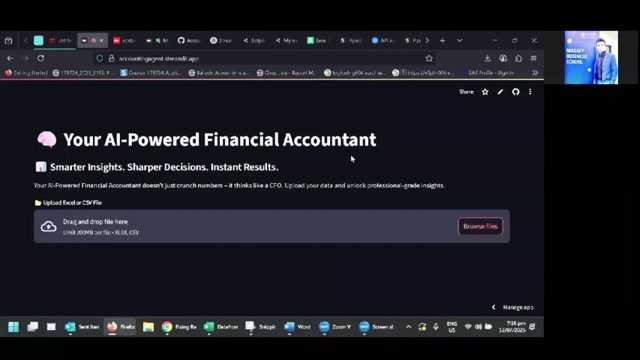
AI-Powered Financial Accountant
A Streamlit application that transforms raw financial statements into CFO-level insights within seconds.
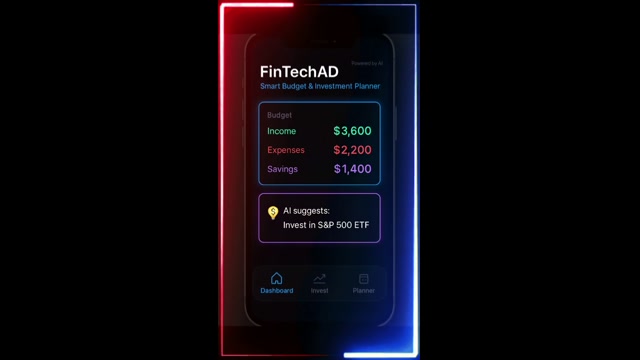
Built for the individual rather than the institution: a conversational planner that tracks income, expenses and savings goals, and a trade-suggestion engine that turns market data into reasoned positions.
AI-Powered Fintech Budgeting and Investment Planner
A smart budgeting and investment planner featuring a conversational interface for tracking income, expenses, and saving…
A tutor that sees, listens and speaks in any language, self-funded, and running on cloud or on local NVIDIA hardware. The demos below show its different surfaces.
Every course is built on the Education Engine — real-time animation, virtual labs, an AI tutor and an exam centre in one app. Click any course to open its full detail.
Business & Industry
One machine-learning pipeline taught once, then applied domain by domain. Marketing works through lead scoring, campaign attribution and customer segmentation; healthcare through readmission risk and length of stay; finance through fraud, credit risk and portfolio optimisation. Each course carries its own end-to-end case studies on real datasets, with competing models and a champion chosen on the metric that matters for that problem.
Analytics, Econometrics & Research Methods
AI-Powered Science & Computing
Each subject is taught by animation rather than by slides. Every chapter runs three ways: a narrated lecture, an interactive walkthrough where the concepts actually animate in real time as D3 and 3D scenes, and a hands-on practical in a real-time virtual lab. On top of that sits an AI tutor — an agent I built and grounded myself, not a generic chatbot — that answers any question and links straight to the exact lesson, and an Exam Centre that predicts likely questions from real past and guess papers, then marks a full mock with feedback. Lectures, animations, labs, practice, entrance-test and practical preparation are all inside one app — a single stop instead of a shelf of tools.
MoneyWorld
Financial capability platformTour + 6 games
A gaming engine that teaches children finance and technology. Children do not learn money from a lecture — they learn it by saving up for a birthday party, rounding up spare change, deciding what goes in the giving jar — so each of those is a small playable station rather than a worksheet. The menu is an illustrated control room: every object taps into a station, and each station holds several games plus scores, history and a leaderboard. It covers earning, spending, saving and budgeting; borrowing, credit and debt; risk, insurance and protection; investing and long-term planning — and the decisions people most often get wrong in each. Every station is a game rather than a worksheet.
Platform Tour
A guided tour of the control room — every station and what each one teaches.
7.3 MB
Full Walkthrough
Ten minutes end to end: the school hub with the money and science quizzes, a maths practical built from rows of apples, and compound growth played out year by year on the piggy bank.
45.5 MB
Fighter — Underground Fight Club Arena
A round-based fighting game with health bars, a combo counter and a 60-second clock, played on screen with a joystick and action pad. Landing a combo is earned by answering, so the fight is won on knowledge rather than button speed. 4 min 17 s.
134.6 MB
Racing Games Showcase
One racing engine reimagined into seven worlds — city, festival, neon, snow, jungle, sea and more. They feel like the endless runners children already play, but the learning is not a quiz bolted on top: you dodge the wrong-answer lane and grab the right-answer boost, so knowing the answer is how you win the race. The demo is the first level of the first subject; the same seven games teach any subject by swapping the content file.
126 MB
Build It — All Levels
Budgeting and construction across every level in one run. Children spend a fixed materials budget, and overspending shows up in the build.
63.1 MB
You Know — Quiz and Throw
Answer a prompt, then throw crafted items at targets. The score blends knowledge accuracy with aim.
24.8 MB
Basketball
A 30-second shooting game built from real basketball clips. Shot power and accuracy are earned by answering correctly.
17.5 MB
Poker — Probability Trainer
Probability, expected value and risk taught through poker, with an animated video dealer and twelve animated player avatars.
A student normally pays for five separate things to learn one subject: school lectures, coaching for the same lectures, lab access for practicals, exam preparation, and a separate academy for the entrance test. Five fees, five buildings, five teachers who never speak to each other — so a student can be ahead in coaching and behind in the lab, and learn a concept one way in class and the contradicting way at the test academy. I rebuilt all five into one platform sharing a single spine: the lecture, the interactive walkthrough, the virtual practical, the exam centre and the entrance-test centre are the same curriculum, the same content and the same AI tutor, so they cannot contradict each other, and it is open every day of the year rather than switching on near the deadline. The quiet part is the AI: one brain across every surface, which knows the lecture you just read, the experiment you just ran and the question you are stuck on, and sends you to the exact page that explains it. One branded shell over Computer Science, Mathematics, Chemistry, Physics and Biology, for ninth through twelfth grade.
Junior and senior sciences: ninth grade chemistry (8 chapters), tenth grade chemistry (8 chapters), Physics (12 chapters), Chemistry (12 chapters) and Biology — plus interactive virtual, periodic and reaction labs and 3D practicals.
The hub
Platform walkthrough
One branded shell over every subject. 1 min 28 s.
12.2 MB
Computer Science
TutorAI — full run
End to end through the Computer Science material, with the tutor answering as it goes. 2 min 04 s.
3.9 MB
Physics
Motion
The animated motion lesson, concepts moving in real time rather than sitting on a slide. 2 min 01 s.
6.0 MB
Mathematics
Trigonometry — degrees and radians
Measuring the turn in degrees, then the radian measured with the circle itself, with an interactive radian dial. 2 min 32 s.
14.5 MB
Maths — Trigonometric Identities
The Pythagorean identities built up on screen, then the question students always ask: why tan θ explodes at 90°. From the maths course lecture pages.
22.6 MB · 1 min 47 s
Computer Science — Computational Thinking
Decomposition, pattern recognition, abstraction and algorithm design, then a 3D array visualiser running selection, insertion and bubble sort so the comparisons and swaps are visible as they happen.
35.0 MB · 4 min 03 s
Exam Centre
The AI tutor marking a full mock: questions drawn from past and guess papers, answers typed in, then scored with written feedback.
25.5 MB · 2 min 53 s
What it replaces
The case for the platform — a fraction of tuition cost, the time it gives back, its own trained tutor rather than a generic chatbot, and animations in place of slides, all running on a phone.
14.5 MB · 1 min 54 s
Chemistry — Virtual Lab
The real-time lab bench: shelves of chemicals, glassware, apparatus and instruments, bottles dragged onto a beaker to pour them in, and a lab assistant answering questions about the reaction as it runs.
48.3 MB · 4 min 49 s
Chemistry — Boyle’s Law
A live experiment on a glass gas syringe: predict what halving the volume does to pressure, move the piston, record each reading off the gauge, then plot the P–V graph and see whether P×V holds.
71.5 MB · 4 min 35 s
Physics — Motion & Kinematics
Distance against displacement, built by scrubbing a walk from A to B: the curving blue trail is the distance travelled, the gold arrow the displacement — one a scalar, the other a vector.
34.8 MB · 4 min 27 s
Biology — Breathing & Gas Exchange
Air followed from nose and mouth down to the alveoli, warmed, moistened and filtered on the way, then the swap itself — oxygen out to the blood, carbon dioxide back.
17.6 MB · 2 min 28 s
Financial Literacy Platforms
Teaching money skills through play2 demos
Gamified platforms that teach financial capability rather than lecture it — built for classrooms and for home, and deployable both locally and in the cloud.
Finance for Kids — Gamified Financial Literacy Platform
An interactive platform designed to empower children with financial skills through gamified learning and personali…
A context-aware teaching platform that knows what the student is looking at, taking live teaching beyond a video call. Each demo shows a different build of it.
AI Education Platform — Dual-AI Context-Aware System
A dual-AI education platform providing context-aware learning unlike generic AI assistants.
Live demonstrations of the AutoMatrixLab education platform — courses, AI tutoring, admin tools, and infrastructure.
COURSE CATALOG
All Courses on Tablet
Admin dashboard showing all ML & Automation courses with module counts, lesson tracking, and content status.
STUDENT VIEW
Student Dashboard
Student-facing dashboard with course progress tracking, platform videos, and AI-powered learning tools.
AI ADMIN
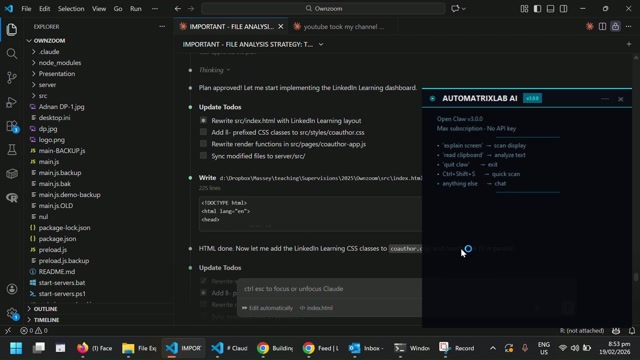
OpenClaw Admin Panel
AI-powered admin dashboard with live chat, course management, content generation, and platform monitoring.
AI ASSISTANT
Educational Jarvis
AI assistant integrated into VS Code — autonomous code generation, project management, and platform development.
SAS VIYA
SAS Dashboard Demo
SAS Viya analytics pipeline running through the AutoMatrixLab automation framework.
RESPONSIVE
Multi-Device Experience — Phones & Tablets
The Education Engine running across phones and tablets — same workspace, every device.
MULTILINGUAL
Tablet — Mandarin Chinese Narration
All courses on tablet with native Mandarin Chinese narration — supporting students globally.
CLAW DEEP DIVE
Educational Claw — Admin Panel Walkthrough
Full admin-panel walkthrough of the AI orchestration platform powering AutoMatrixLab.
SAS COURSE
SAS Course Demo
The SAS programming course running inside the Education Engine — workspace tour with the SAS simulator (not Viya).
FINANCE COURSE
Financial Planning Course Tour
Financial Planning course feature tour — retirement savings, tax and insurance modules in the Education Engine, with KiwiSaver as the NZ case.
Universal Multilingual AI Tutor
Education as a right1 demo
An AI tutor that reads, hears, types and speaks in every major language — reading what is on screen and explaining it aloud, driven through the robot’s vision and voice.
Universal Multilingual AI Tutor — Education as a Right
An AI tutor that reads, hears, types, and speaks in every major language — reading English on screen and explaining it…
Research and analytics projects commissioned by or conducted in collaboration with NZ government agencies, financial institutions, and industry organisations. Completed through Massey University Fin-Ed Centre, earning significant revenue for the school and Centre.
NZ Ministry of Health
Gambling Harm Identification Using Client Voices Data
Commissioned by Ministry of Health NZ. Analysed FinCap Client Voices data to identify gambling-harm trends and guide prevention policies.
Te Ara Ahunga Ora
Government vs Community Support in Times of Crisis
Compared crisis-response effectiveness between government and community support in NZ and Australia. Provided policy recommendations.
Te Ara Ahunga Ora
COVID-19 Impact on Financial Wellbeing of Single Parents NZ
Used proprietary Retirement Commission data to identify financial hardship factors and recommend targeted interventions for single parents.
Te Ara Ahunga Ora
Teleworking Ability & Financial Wellbeing During COVID-19
Investigated teleworking impact on wellbeing and income stability of NZ labour force using Retirement Commission datasets.
Te Ara Ahunga Ora
Sorted Website User Behaviours
Explored engagement patterns among frequent and infrequent Sorted website visitors to enhance NZ financial-literacy initiatives.
Massey Fin-Ed Centre
Financial Knowledge & Advice-Seeking Behaviour by Ethnicity
Cultural Perception and Financial Wellbeing surveys (preliminary analysis through Massey Westpac Fin-Ed Centre).
Massey Fin-Ed Centre
Household Financial Wellbeing in Australia & NZ
Used the ANZ Bank Financial Wellbeing Survey (NZ) dataset, accessed through the Massey Fin-Ed Centre research consortium, to map financial-wellbeing patterns and guide capability frameworks for households across AU and NZ. ANZ Bank is the data source; the Fin-Ed Centre is the commissioning party.
Used the ANZ Bank Financial Wellbeing Survey (NZ) dataset, accessed through the Massey Fin-Ed Centre research consortium, linked with FinCap caseload data, to explore correlations between mental health, financial hardship, and emergency readiness.
FinCap
Debt Dynamics in NZ: Home Loan Affordability & Third-Tier Lenders
Analysed FinCap client data to assess debt distribution and home-loan affordability trends. Informed responsible-lending strategies.
SkyCity Auckland Community Trust
Financial Capabilities of MWDI Loan Clients
Sponsored by the SkyCity Auckland Community Trust and delivered through the Massey Fin-Ed Centre. Analysed MWDI loan client data to evaluate Māori wahine and whānau business finance needs and inform policy and support programmes for Māori entrepreneurs.
Massey Fin-Ed Centre
Te Manu Ka Rere — Māori Enterprise Financial Capability
Massey Fin-Ed Centre + Te Au Rangahau. Financial capability of Māori entrepreneurs and enterprise viability across Auckland and Northland.
NZ Automobile Association
Customer Lifetime Value & Cross-Selling
Applied advanced segmentation models to NZAA customer data. Identified strategies to improve loyalty and retention.
NZ Red Cross
Website Performance Insights
Analysed proprietary traffic data to evaluate user engagement and improve marketing and public-awareness strategies.
Massey University Provost
Student Completion & Retention Rates
Analysed proprietary Massey data across 20+ admission criteria investigating factors influencing student completion and retention.
Swanson RSA
Understanding Customers Using Daily Eftpos Sales Data
Used Eftpos data to generate customer-segmentation insights supporting targeted outreach.
Te Ara Ahunga Ora
Te Ara Ahunga Ora Retirement Commission Financial Capability Barometer analysis stream — 2020 Master of Analytics internship cohort (6 students)
Te Ara Ahunga Ora
Investigating Critical Social and Economic Issues using Advanced Panel Data Models
Published Insights Bites article
Te Ara Ahunga Ora
Sole Parenting and the Financial Wellbeing of New Zealanders (2022 MAnalytics intern report)
Student capstone using Contact Energy data — problem, solution, data structures and analytics
Recognition
Awards & Honours
★
SAS Global Educator Award 2026
SAS Institute
Received with a sponsored trip to SAS Innovate, Grapevine, Texas, USA
I designed and taught the first SAS Viya course in Asia-Pacific — introducing it at Massey University from its earliest development stage. I helped shape SAS Viya V2 as a pilot participant providing direct technical feedback to the SAS USA team.
🏆
Best Thesis Award
Durham University Business School
Summer Congregation. PhD in Accounting & Finance. Distinction in all coursework.
🌐
Commonwealth Scholarship — Full Fee & Maintenance Grant
Commonwealth Scholarship Commission, UK
Full doctoral scholarship for studies at Durham University. One of the most competitive scholarships in the world.
🌟
Most Outstanding Contribution to College Life Award
Durham University
Awarded twice for exceptional contribution to university community life.
🦸
Undercover Hero Award
Durham University
🏳️
Ambassador to the College Award
Durham University
🎓
Multiple Massey Business School Awards & Nominations
Massey University
Consistently excellent course evaluations across all three campuses (Auckland, Wellington, PSB Singapore).
🏅
Second Position & Merit Scholarship — MBA
Institute of Business Management
CGPA 3.68/4.0. Second in graduating class.
🏅
Fourth Position & Merit Scholarship — B.Eng
NED University of Engineering & Technology
CGPA 3.55/4.0. Industrial Electronics.
⚖️
Associate Fellow — Higher Education Academy (AFHEA)
Advance HE, UK
Credential ID: PR055577
📜
Durham University Learning and Teaching Award (DULTA)
Durham University
👑
President — Graduate Common Room
Durham University
Elected president. Previously served as International Students Officer.
Why this exists
Most organisations now have access to AI. Very few have changed how they work because of it. The bottleneck is not access and it is not money — it is that nobody has shown them what is actually possible in their own domain. It is a problem of confidence and capability, not tools.
I have watched this from both sides for years: inside universities, where the capability arrives long before anyone changes what they do with it, and inside client organisations, where the same tools sit unused for want of a working example.
So everything here is a demonstration rather than a proposal. Each platform, each application, each demo exists to show what can be done now, in a specific industry, built end to end and running. Not slides, not pilots that never ship — systems you can watch working. Some are concept demonstrations rather than polished products, and I say so where that is the case.
What I am trying to prove is narrow and testable: that a single person with the right method can build, in one domain after another, the thing an organisation was told would take a team and a year.
★ SAS Global Educator Award 2026
Dr Adnan Balloch
Engineer. Researcher. Educator. Builder. Founder.
A career spanning four disciplines that rarely meet in one person: Electronics Engineering, Financial Economics, Management, and Artificial Intelligence. Taught at Durham University (UK), Aberystwyth University (UK) and its Mauritius campus, NED University of Engineering & Technology (Pakistan), Massey University (New Zealand) and its Singapore campus at PSB Academy — five countries across Europe, Africa, Asia, and the Pacific.
Started as an Instrument & Control Engineer automating industrial giants across petroleum, telecoms, hospitals, manufacturing, and logistics — building safety-critical control systems for British Petroleum (BP), OMV, NRL, OGDCL, Pakistan Steel Mills, and Pak Suzuki. As an engineering undergraduate in 2002, built an interactive cable TV voting system via SMS that spread across South Asia — years before streaming existed.
After a PhD at Durham University (UK), led corporate finance teams at Deloitte, delivered projects for The World Bank and international investors, and collaborated with Silicon Valley AI startups. In New Zealand, advised the Ministry of Social Development, Financial Markets Authority, Retirement Commission, FinCap, IRD, major NZ banks, insurance providers, Ministry of Health, and District Health Boards.
Developed the first-ever university course using SAS Viya at a time when both academia and industry were barely aware of the platform. Shaped its V2 as a pilot participant, built SAS automation applications, and taught the entire SAS software ecosystem. In 2026, SAS Institute named me a Global SAS Educator Award winner — featured in the official press release, invited to SAS Innovate 2026 in Texas to receive the award among Fortune 100 executives and top tech leaders, and attended the inaugural SAS Educate APAC 2026.
Today building AutoMatrixLab — AI-powered applications across ten fields, multilingual courses, and gamified learning. At its core: “Educational Jarvis” — an always-on, screen-aware AI companion on NVIDIA RTX 4090 infrastructure, local or cloud, orchestrating intelligent agents across every tool you use.
Developed ‘Big Data in Finance and Banking’ and ‘Applied Econometrics Methods’ courses for Master of Analytics. Pioneered the first-ever university course using SAS Viya at a time when both academia and industry were barely aware of the platform. Shaped its V2 as a pilot participant providing direct technical feedback to the SAS USA team. Built SAS automation applications and taught across the entire SAS software ecosystem. Built AI applications across ten fields, deployed to cloud and to local NVIDIA RTX 4090 infrastructure. Supervised PhD and Master’s students in advanced analytics and household finance. See Student Projects for details. Also taught at Massey’s Singapore campus at PSB Academy. Recipient of the 2026 SAS Global Educator Award.
Consultant — Public and Private Organizations
New Zealand | Jan 2019 – Present (6+ years)
Assisted Ministry of Social Development, Financial Markets Authority, Retirement Commission, FinCap, IRD, banks and insurance providers with data analytics consulting, policy research, and advanced econometric modelling.
Lecturer in Accounting & Finance
Aberystwyth University, Wales, UK & Mauritius Campus | Jan 2016 – Jan 2018 (2 years)
Program Leader for Accounting and Finance. Module Leader for Investments and Financial Instruments, Corporate Finance, Financial Management, Auditing, and Financial Accounting. Also taught at Aberystwyth’s transnational campus in Mauritius.
Consultant — AI and Analytics Joint Ventures
Silicon Valley & Global | Jan 2015 – Dec 2017 (3 years)
Assisted several organisations including Silicon Valley based startups with local and overseas artificial intelligence and analytics projects.
Consultant — Corporate Finance
Deloitte, Pakistan | Jan 2016 – Dec 2016
Led corporate finance teams in consulting and advisory projects for international clients including The World Bank and high-profile international investors. Provided training and mentorship to consulting teams.
Research Student Teacher
Durham University Business School, UK | Jan 2011 – Mar 2013
Taught seminars in Advanced Microeconomics and Economic Principles modules. Assisted postgraduate students in dissertation work.
Visiting Professor
Institute of Industrial Electronics Engineering (IIEE), NED University, Pakistan | 2006 – 2009
Taught Engineering Economics and Mathematics modules at the same institution where I graduated as an Industrial Electronics Engineer. Conducted workshops in computer programming and automation.
National Engineering & Scientific Commission of Pakistan | Jan 2006 – Dec 2010 (5 years)
Led ISO 9001, 14001 and OHSAS compliance and EMI/EMC Engineering across major industrial clients in petroleum, telecoms, hospitals, manufacturing, and logistics. Delivered automation and instrumentation projects for OGDCL, Pakistan Steel Mills, Pak Suzuki, and national telecom and healthcare infrastructure. Supervised quality management systems and electromagnetic compatibility testing across diverse industrial environments.
Instrument & Control Engineer
ENAR Petrotech Services Pvt. Ltd. | Jan 2005 – Dec 2005
Designed, implemented and supervised instrumentation and control systems for petroleum giants including British Petroleum (BP), OMV, and NRL. Automated industrial processes across petrochemical, manufacturing, and energy sectors — building safety-critical systems where failure means explosions, chemical leaks, or production losses costing millions per hour.
Industry Impact
Industry Collaborations
SAS Institute — Global Educator Award & APAC Pioneer
First university in Asia Pacific to teach with SAS Viya — deploying it at a time when both academia and industry were barely aware of the platform. Shaped SAS Viya V2 as a handpicked pilot participant, providing direct technical feedback to SAS USA. Built SAS automation applications using cloud and local license installations. Taught the entire SAS software ecosystem: Base SAS, SAS/STAT, SAS/ETS, Enterprise Miner, Enterprise Guide, SAS/GRAPH, SAS/OR, SAS Studio, SAS Viya, JMP, and more. Recipient of the 2026 SAS Global Educator Award. The award included a sponsored trip to SAS Innovate 2026 in Texas, and a place at the inaugural SAS Educate APAC 2026.
New Zealand Government & Regulators
Assisted Ministry of Social Development, Financial Markets Authority, Retirement Commission, FinCap, IRD, Banks, Insurance providers, Ministry of Health, DHBs and manufacturing industries with analytics and subject matter advice.
Silicon Valley & Global Joint Ventures
Assisted several organisations including Silicon Valley based startups with local and overseas artificial intelligence and analytics projects through global joint venture collaborations.
Massey University Fin-Ed Centre
Completed several commissioned and noncommissioned analytics and research projects for Massey University Fin-Ed Centre, earning significant revenue for the school and the Centre.
Qualifications
Education
🎓
PhD in Finance
Durham University Business School, UK | 2011–2015
Best Thesis Award • Distinction in all coursework
Commonwealth Scholarship (full fee and maintenance grant). Research focus on household finance, financial literacy, and stock market participation. Published in FT50 journals.
📈
MBA — Finance
Institute of Business Management, Pakistan | 2006–2008
Second Position — CGPA 3.68/4.0
Merit scholarship recipient. Foundation for transition from engineering to financial research and academia.
⚡
B.Eng — Electronics
NED University of Engineering & Technology, Pakistan | 2001–2004
Fourth Position — CGPA 3.55/4.0
Merit scholarship (2001–2004). The engineering mindset that drives the technical architecture behind every AI project.
My research portfolio — published work and research in progress — is organised under the Research tab with filter chips for tier, research line, and submission status.
Conference Presentations
Work presented at the 50th FMA Annual Meeting, New York (2020)Work presented at the Westpac Fin-Ed Conference, Auckland (2019)Work presented at the Royal Economic Society, Manchester (2015)Work presented at the British Accounting & Finance Association, Durham (2012)SAS Innovate 2026, Texas (Award Recipient & Invited Guest)SAS Educate APAC 2026 (Inaugural — Award Recipient)
Consulting & Government Research Projects
Method
How a Claim Gets Established
The work below rests on four positions about evidence. They are what separate a defensible finding from a well-fitted one.
Causal inference, not prediction
Regression, machine learning and data mining are all correlation without an identification strategy, and adding controls does not change that. A causal claim needs a design, an identification strategy, and tests built to break the result rather than confirm it.
Natural experiments
Most organisations assume a causal question needs a controlled trial, and give up when they cannot afford one. Usually they do not need it. Policy changes, rate moves, regulatory shifts and other external shocks create natural experiments already sitting in the data — treatment and comparison groups formed by something that happened anyway. Finding them and analysing them properly is cheaper than any trial and often closer to the real world. I have run these for clients.
Experimental and behavioural economics
Not only a research interest — it is how the platforms are designed. The finite intelligence budget in AXIOM, the real-data economy in Miniconomy and load-bearing knowledge in MoneyWorld are experimental designs, not just mechanics.
Hybrid models
Survival analysis combined with neural approaches, and similar pairings: the rigour of econometrics with the flexibility of machine learning, for accuracy without losing the ability to defend a result.
Published and Ongoing Research
My research is in behavioural economics and behavioural finance — how people actually make financial decisions, and what those decisions do to them. It runs across human decision making, financial capability, financial wellbeing, emotional wellbeing and overall wellbeing. None of it was ever research for its own sake. It is how I came to understand people, organisations and systems well enough to build for them, and it is the foundation every platform on this site is built on.
PublishedTier A*
When It Rains It Drains
Psychological Distress and Household Net Worth
Balloch, A.; Engels, C.; Philip, D.
Households facing persistent psychological distress accumulate less wealth across the life cycle, and the gap survives standard income, employment, and demographic controls. We ask whether mental-health stress operates as a measurable behavioural-economic friction on household balance sheets, distinct from income shocks and education channels.
Financial Literacy, Trust, and Stock Market Participation
Balloch, A.; Nicolae, A.; Philip, D.
Stock-market participation rates differ sharply across households with comparable income and wealth, and the residual gap maps onto differences in financial literacy and trust. We ask whether financial literacy and trust in financial institutions operate as behavioural-economic prerequisites for market participation, distinct from access and cost channels.
PhD Thesis — Durham University Business School (2015)
Balloch, A.
Doctoral thesis comprising empirical essays in household finance. Applies modern panel-econometric techniques to large household panel datasets to investigate financial decision-making, wealth accumulation, stock market participation, trust, and the behavioural determinants of household financial outcomes.
Funder: Durham University Business School (doctoral funding) · etheses.dur.ac.uk (search "Adnan Balloch")
Conferences & Presentations
8 academic conferences, seminars and policy presentations.
2026International Conference
AFAANZ Annual Conference (Accounting and Finance Association of Australia and New Zealand)
Melbourne, Australia
Dynamics of Household Financial Hardship: Landing, Path, Duration and Exit. Pho, L.T.; Qiu, M.; Balloch, A. Presented in the behavioural finance stream.
2026International Conference
HILDA Survey Research Conference
Melbourne Institute of Applied Economic and Social Research, University of Melbourne
Dynamics of Household Financial Hardship: Landing, Path, Duration and Exit. Pho, L.T.; Qiu, M.; Balloch, A. Presented at the conference run by the Melbourne Institute, which produces the HILDA Survey the paper is built on.
2018–2026Seminar
AI, Analytics and Automation Presentations
Massey University, New Zealand
Miscellaneous seminars, workshops and guest presentations across schools and programmes.
2022Seminar
Insights Bites Seminar
Te Ara Ahunga Ora Retirement Commission — internal seminar presentation
2020International Conference
50th Anniversary FMA Annual Meeting
New York, USA
Balloch, A.; Engels, C.; Philip, D.
2019International Conference
Massey Fin-Ed Centre's Building Financially Capable Communities Conference
Auckland, New Zealand
2015International Conference
Royal Economic Society Annual Conference
Manchester, UK
Balloch, A.; Philip, D.; Nicolae, A.
2012International Conference
Northern Area Group and Interdisciplinary Special Interest Group Annual Conference (British Accounting and Finance Association)
Durham, UK
Research in Progress
Twenty-one working papers and supervised projects across the four research lines, with status badges marking publication-readiness — including four new HILDA 2026 papers in active preparation for Tier-A journal submission. Findings reported on each detail page are from completed analysis runs; manuscripts and external links (ResearchGate, journal DOI) will be added on first public release.
Supervised across Master of Analytics, Master of Finance, PhD, and industry-internship programmes. Each is an industry-partnered research engagement — a host organisation, a real dataset, and a question that organisation actually needs answered — run end to end from scoping through analysis to a delivered report.
Financial Hardship Dynamics — AI-Automated Research Platform
A business management student building her own AI-powered analytics systems after taking my course
The Story
She came from a business management background. No programming experience. No data science training. No exposure to machine learning or survival analysis. She enrolled in my analytics course — and what happened next is why I believe AI changes everything about how we do research.
Together, we built a complete AI-automated research analytics platform that analyses 21 years of longitudinal household data — 437,006 observations across 43,784 households — from one of the world’s largest high-dimensional panel datasets.
The platform doesn’t just run models. It automates the entire research pipeline: data preparation, variable construction, competing risks survival analysis, transition matrices, spell dynamics, and even auto-generates publication-ready draft sections with tables, figures, and AI-written commentary.
The research question itself is powerful: What is the first financial hardship a household experiences? How do they transition between hardship states? What determines who escapes and who gets trapped? The platform discovered that 49.6% of first-time hardship begins with unpaid bills, and that 93–96% of the lasting damage from hardship is psychological, not financial.
She is now extending the platform herself — adding new research topics, running her own models, and building analytical tools that would normally require an entire data science team.
“A business management student — with no prior coding experience — is now independently running survival analysis, competing risks models, and neural network research on 437,000 observations. That’s not a student. That’s a researcher.”
The old world said: to do advanced econometrics, you need years of statistics training. To run machine learning models, you need a computer science degree. To analyse panel data at this scale, you need an entire research team. AI collapsed all of that into one student, one course, and one platform.
① Course — learn analytics foundations and AI tools
② Data — prepare 21 years of panel data (437K observations)
③ Models — build Cox, DeepHit, and hybrid survival models
④ Automate — create full pipeline from raw data to draft
⑤ Extend — student adds new topics and runs independently
🏆 Outcome
A business management student with zero programming background delivered a research-grade analytics platform that processes one of the world’s largest household panel datasets. The platform runs five classes of survival models (Cox PH, Fine-Gray competing risks, Random Survival Forest, DeepHit, and a novel Hybrid Cox-Neural Network), generates transition matrices, spell analysis, and auto-writes publication-quality draft sections targeting A* and FT50 journals.
She is now independently extending the platform with new research topics — adding family network analysis, intergenerational transmission, and wellbeing cascade models — all built on the same AI-automated infrastructure.
This is the future of research: AI doesn’t replace researchers. It turns every curious student into one.